The mosque built by women in India celebrates 100 years in London
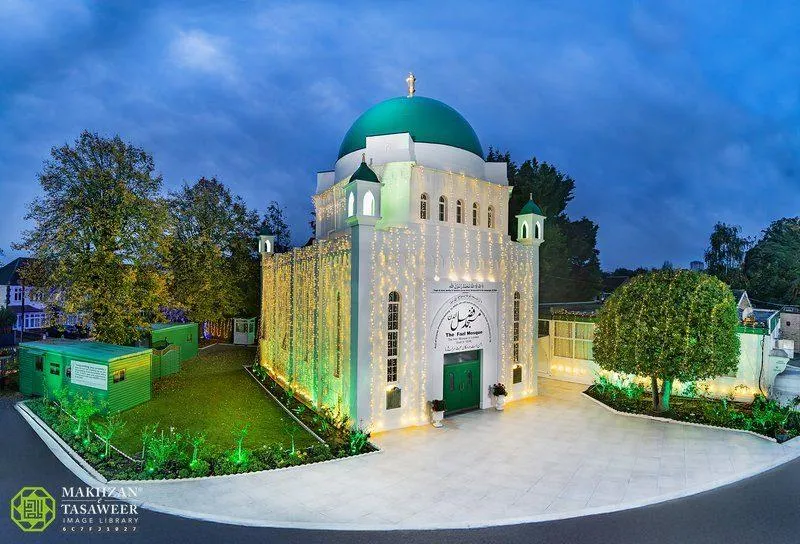
A mosque funded by ordinary Muslims living thousands of miles away in India is celebrating its 100th anniversary this weekend.The Fazl Mosque in Southfields, which opened on October 3, 1926, and became London’s first purpose-built mosque, will mark its centenary with prayers, community service projects, 10,000 meals for homeless people, and 10,000 volunteer hours dedicated to helping those in need across Britain.
The mosque’s story began more than a century ago in Qadian, a small town in what was then British India.The project was funded almost entirely through donations from members of the Ahmadiyya Muslim Community, many of whom would never travel to Britain or see the building their sacrifices helped create.
Among those contributors were women who sold jewellery and other treasured possessions to support the construction of a mosque in a distant land.Their donations helped lay the foundations for what would become one of the most historically significant mosques in Britain.When the mosque opened, people from different faiths and backgrounds gathered in Southfields to witness a moment that few could have imagined a generation earlier.Members of Parliament, faith leaders, diplomats, civic representatives, and local residents joined Muslims from across Britain for the inauguration of what was then known as the London Mosque.
Designed by Lancashire-born architect Thomas Hayton Mawson, the building combined influences from the Indian subcontinent with the character of suburban London.
What began as a single mosque has since grown into a nationwide community with more than 150 chapters across the United Kingdom.
Over the course of the past century, the mosque has played a role in some remarkable moments of history.In 1933, Muhammad Ali Jinnah, who would later become the founder of Pakistan, returned to the mosque and spoke of the influence its imam had on his decision to become involved in the independence movement.During the Second World War, the mosque provided shelter and refuge during the Blitz as London came under sustained bombardment.In 1984, following religious persecution in Pakistan, the fourth caliph of the Ahmadiyya Muslim community, Hazrat Mirza Tahir Ahmad, migrated to Britain and established the mosque as the international headquarters of the worldwide community.
From Southfields, he launched Muslim Television Ahmadiyya International, the world’s first global Muslim television channel, and founded the humanitarian organisation Humanity First during the Bosnian conflict.
The fifth caliph and current worldwide head of the community, Mirza Masroor Ahmad, was elected at the mosque in 2003.
Today, the mosque remains both a place of worship and a centre of international activity, hosting visits from politicians, faith leaders, diplomats and community representatives from around the world.
In 2018, the building received listed status from Historic England, recognising its significance to Britain’s cultural and religious history.
Earlier this year, Wandsworth Council awarded the mosque a green heritage plaque.Reflecting on the centenary, Mirza Masroor Ahmad said: “The Fazl Mosque was built through the sacrifice of people who gave what little they had for a place many of them would never themselves see.
“As we mark this historic anniversary, Ahmadi Muslims will express their gratitude to God through prayers for peace and by helping their neighbours and those in need by giving their time for the betterment of society. This is the true spirit of Islam.”
The centenary celebrations come under the theme:
Fazl Mosque: Beacon of Peace – A Century of Integration, Loyalty, and Service.
Rather than focusing solely on the building’s history, organisers have chosen to mark the occasion through acts of community service.Alongside the 10,000 meals and volunteer hours, a permanent exhibition exploring the mosque’s history will open to visitors.
The community will also launch a nationwide awareness campaign, including advertising on 100 buses across London, highlighting the mosque’s century-long contribution to British society.Rafiq Hayat, national president of the Ahmadiyya Muslim Community UK, said:
“Our members were made welcome here, and that welcome has never been forgotten.”This centenary belongs to Britain as much as it belongs to us. We are marking it by showing once again that we are here not as guests but as loyal citizens who want to help our country in every way possible to progress and prosper, especially by helping the most in need.”
A hundred years after people first gathered outside the newly opened London Mosque, its message remains much the same.
At a time when questions about integration and belonging continue to be debated, the community says the mosque stands as a reminder that people from different faiths, cultures, and backgrounds can live together with mutual respect and service to others.