FAZL MOSQUE CENTENARY AHMADIYYA MUSLIM COMMUNITY UK 1926 2026 Fazl Mosque Centenary 1926 — 2026

The first purpose-built mosque in London

Fazl Mosque:Beacon of Peace

The Fazl Mosque was the first purpose-built mosque in London and is also known as The London Mosque.

Its significance and impact far exceed its size. It was the mosque from which the peaceful message of Islam has been conveyed to Britain. From its inception it was a hive of activity, serving London’s growing Muslim community, and a hub for interfaith dialogue and debate. It hosted faith, civic and political leaders, and promoted peace, harmony and service to mankind.

1889

Who we are

The Community
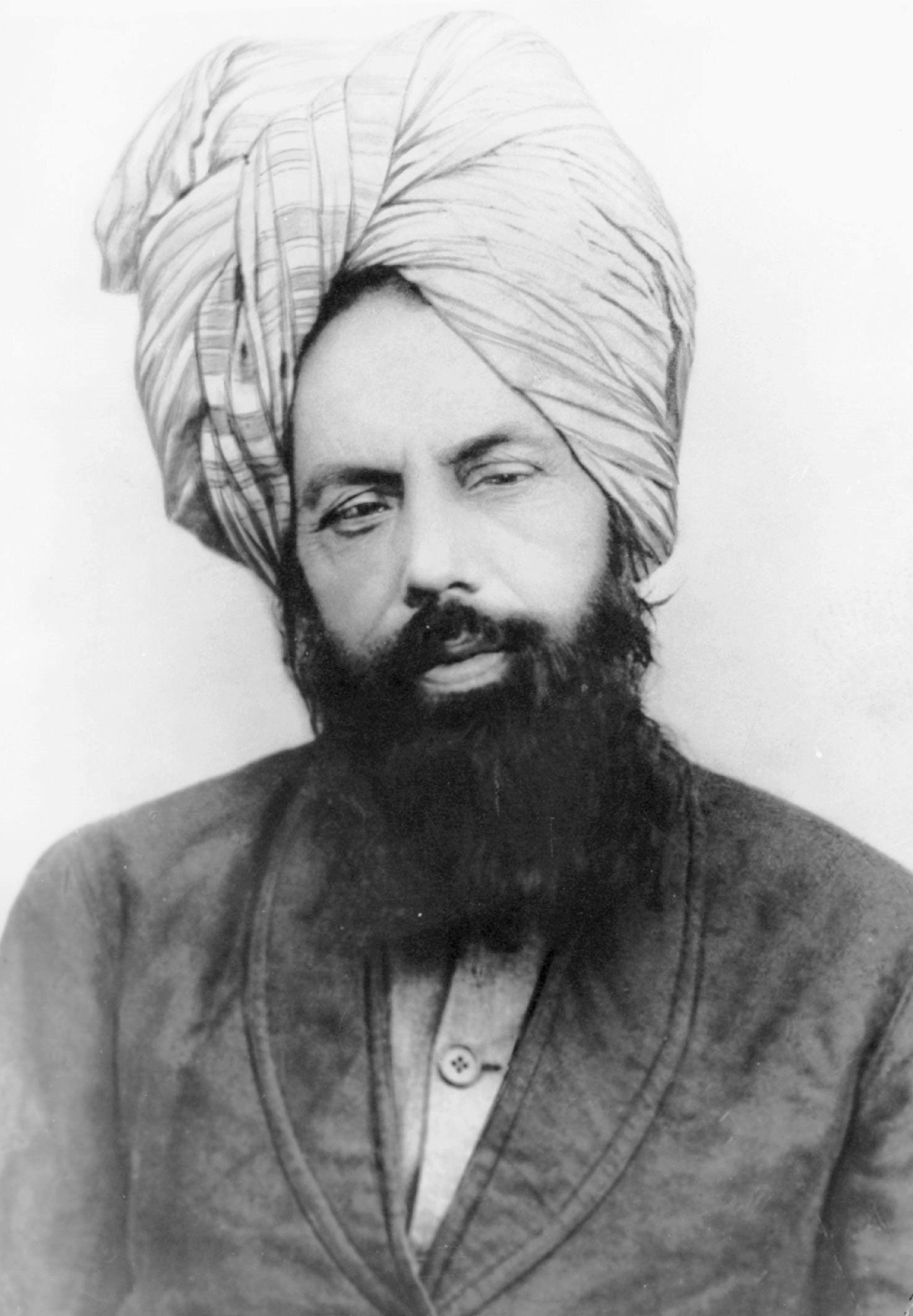
Hazrat Mirza Ghulam Ahmad (peace be on him)
Hazrat Mirza Ghulam Ahmad(peace be on him) — Founder of the community, (1835 - 1908)
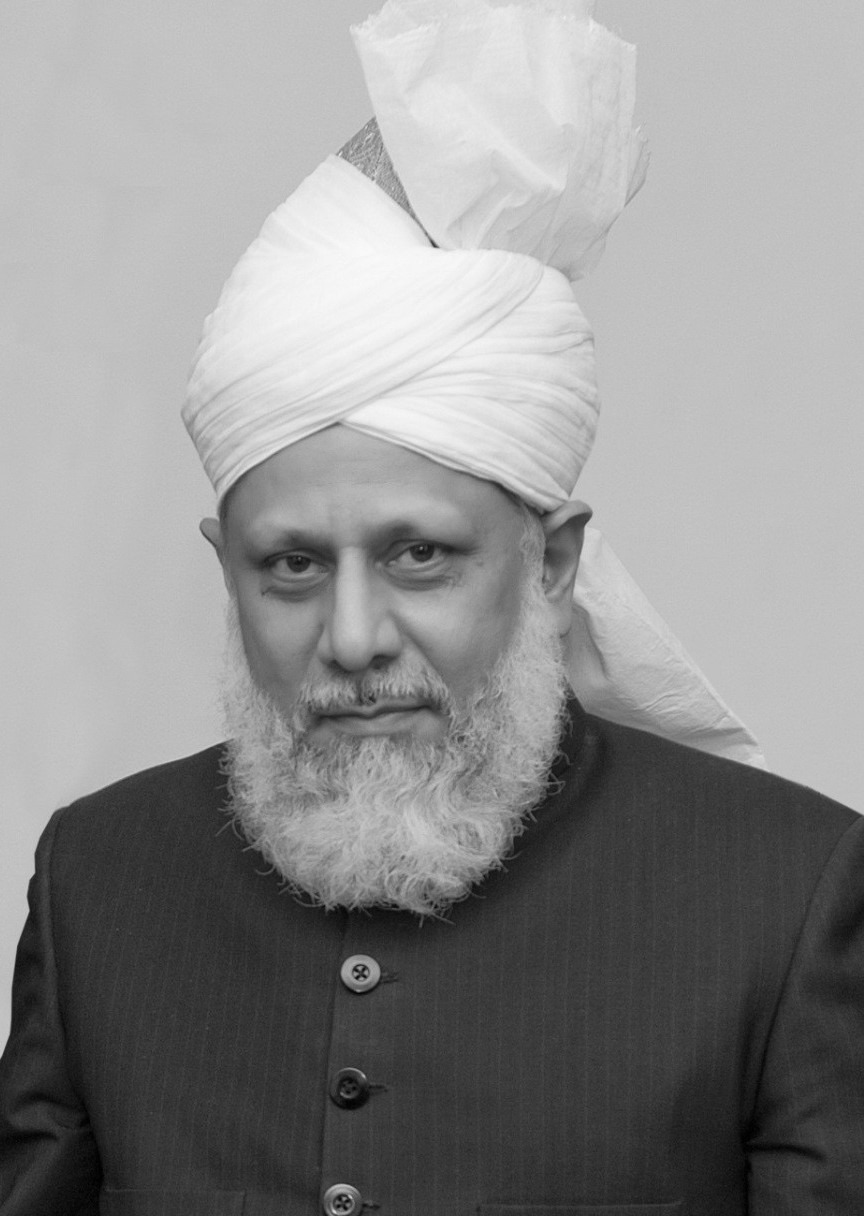
Hazrat Mirza Masroor Ahmad (may Allah be his Helper)
Hazrat Mirza Masroor Ahmad(may Allah be his Helper) — The fifth and present Caliph, elected 2003

Founded in 1889 in Qadian, India, and now established in 213 countries

The Ahmadiyya Muslim Community was founded in 1889 by Hazrat Mirza Ghulam Ahmad of Qadian, India. He claimed to be the expected reformer of the latter days and the awaited one of the world’s religions (the Messiah and Mahdi of the latter days). His mission was to revive the peaceful teachings of Islam and engender in people’s hearts the love of God and the duty to serve mankind.

The community is entirely self-funded and is now established in 213 countries, and it spearheads an international effort to promote education and health across the developing world, as well as a global peace campaign to champion human rights for all.

The community is led by a system of Khilafat (spiritual leadership). His Holiness, Hazrat Mirza Masroor Ahmad, is the community’s Fifth Khalifa (Caliph) and is based in the UK. He leads his global community and inspires it to serve humanity with the spirit of kindness and humility that is integral to Islam.

In accordance with the teachings of Islam, he upholds the honour of all prophets of God and highlights the role of religion in the promotion of peace. His Holiness has travelled globally to promote dialogue and understanding. He has also written to world leaders urging them to inculcate justice and peace in international relations to avoid regional conflicts from engulfing the entire world.

We earnestly desire that all people, irrespective of their beliefs, may unite in fulfilling the rights of their Creator and play their respective roles in sowing the seeds for lasting peace in the world.
Hazrat Mirza Masroor Ahmad, the Fifth Caliph of the Ahmadiyya Muslim Community, 19 October 2024

1920

What the mosque cost the people who gave it

The Vision

The Ahmadiyya Muslim Community established its first overseas branch in Britain, the heart of a global empire. It needed a permanent base in the UK, so the Second Caliph of the Ahmadiyya Muslim Community, Hazrat Mirza Bashir-ud-Din Mahmud Ahmad (may Allah be pleased with him), instructed the community’s first missionary in the UK, Chaudhry Fateh Muhammad Sial, to find a suitable site.

The property at Melrose Road was deemed suitable and an historic appeal at the community’s headquarters in Qadian, India, saw nearly 65,000 rupees (£8,500) raised for the acquisition of the site and the construction of the mosque. The land was bought in 1920 for £2,223, and construction cost was £6,223, all of this was funded entirely by people who responded to the call of the Caliph.

£2,223 bought the land at Southfields in August 1920

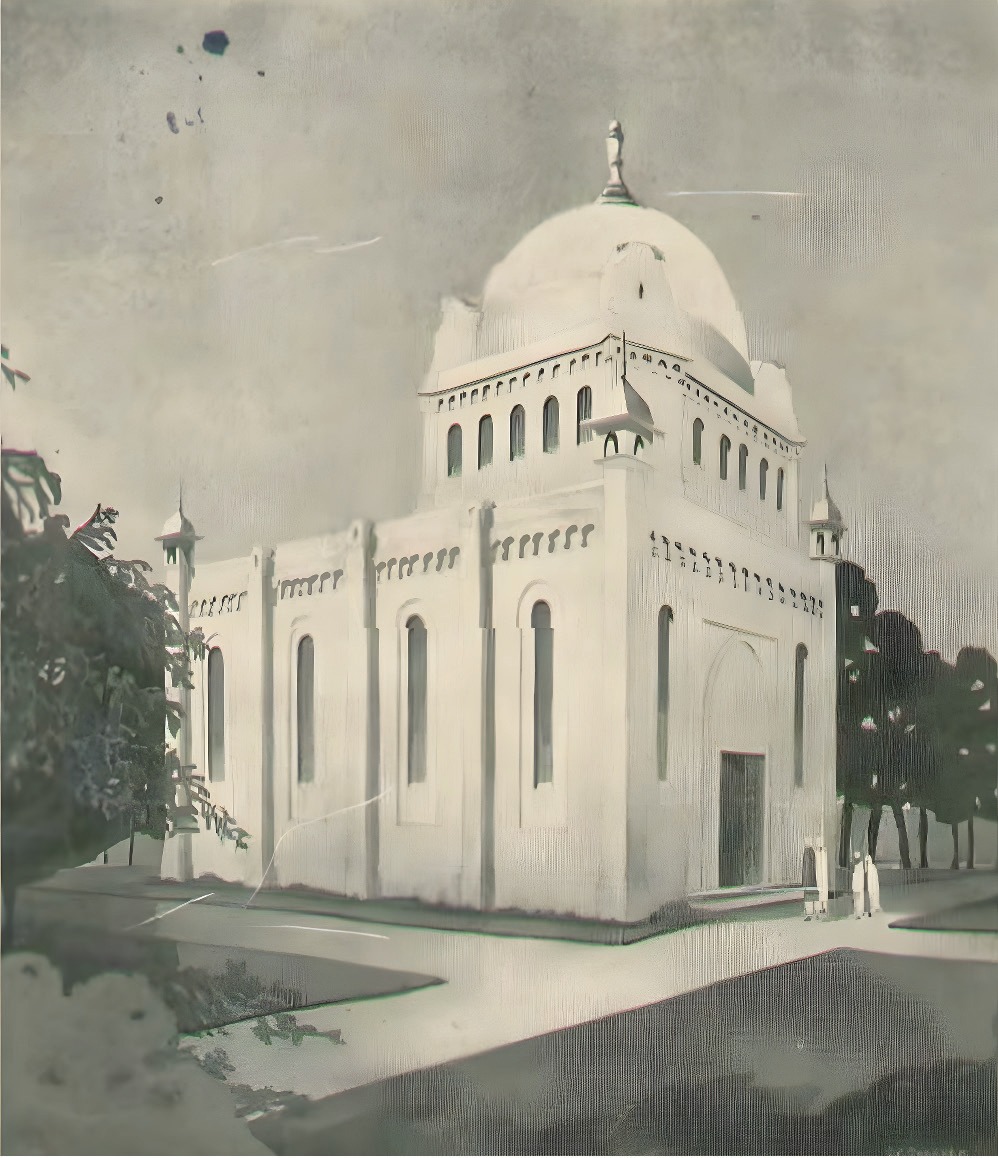
The architect’s impression of the mosque

1924

19 October 1924

The Foundation Stone

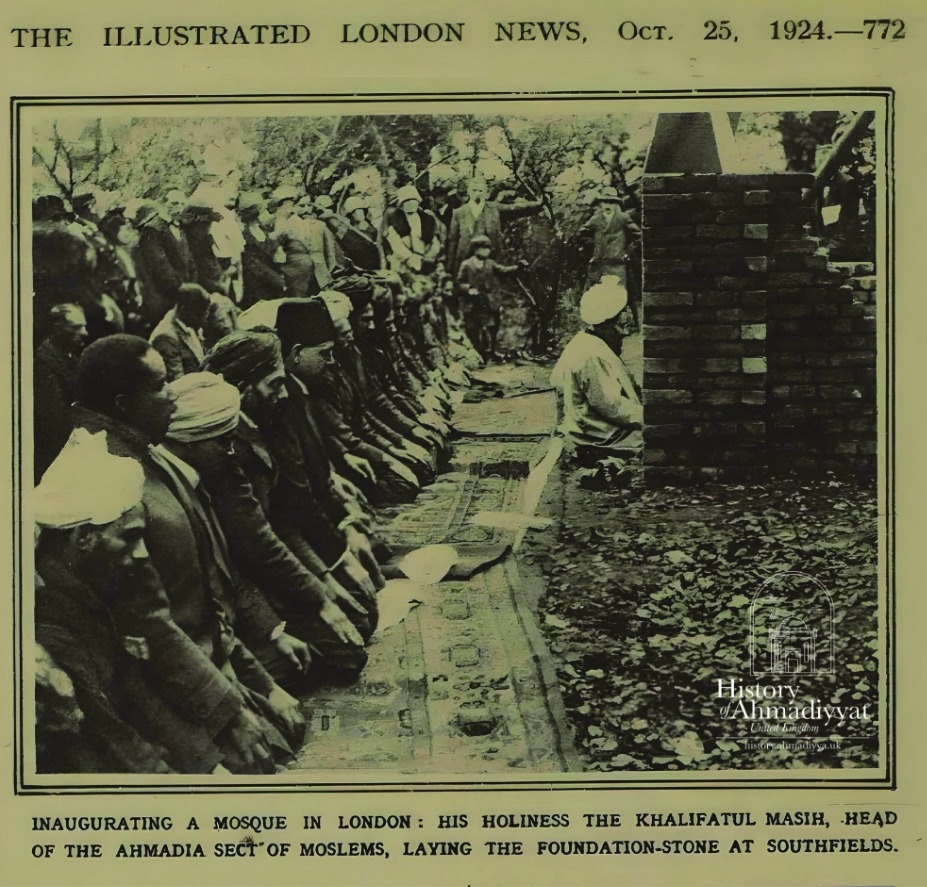
The Second Caliph, Hazrat Mirza Bashir-ud-Din Mahmud Ahmad (may Allah be pleased with him), visited Britain for the first time in 1924 to speak at the Conference on Some Living Religions Within the Empire at the Imperial Institute in London. During this historic visit he also laid the foundation stone for The Fazl Mosque with his own hands. The mosque was inaugurated just two years later on 3 October 1926 and its first Imam was Maulana Abdur Raheem Dard. Both events were attended by hundreds of people, including politicians, ambassadors and people of different faiths. This marked an historic new chapter for London and Britain.

Over 200 attended, of ten nationalities and five faiths

What the world truly needs is tolerance. This entails individuals maintaining differences in beliefs and principles while continuing to coexist with love for one another.

Hazrat Mirza Bashir-ud-Din Mahmud Ahmad, second Caliph of the Ahmadiyya Muslim Community, at the foundation laying, 19 October 1924
The Illustrated London News, 25 October 1924: “Inaugurating a mosque in London:
                His Holiness the Khalifatul Masih, head of the Ahmadia sect of Moslems, laying
                the foundation-stone at Southfields”
The Illustrated London News, 25 October 1924: “Inaugurating a mosque in London: His Holiness the Khalifatul Masih, head of the Ahmadia sect of Moslems, laying the foundation-stone at Southfields”

1926

From a drawing to a building, 1924 to 1926

The Mosque Rises

Set into the stone was an inscription in the Caliph’s own words. It asked that the place be “for ever and ever a centre for promulgating the views of purity, piety, justice and love,” and that it “prove a sun of spiritual light radiating forth in this country.” It is still there, in the fabric of the building.

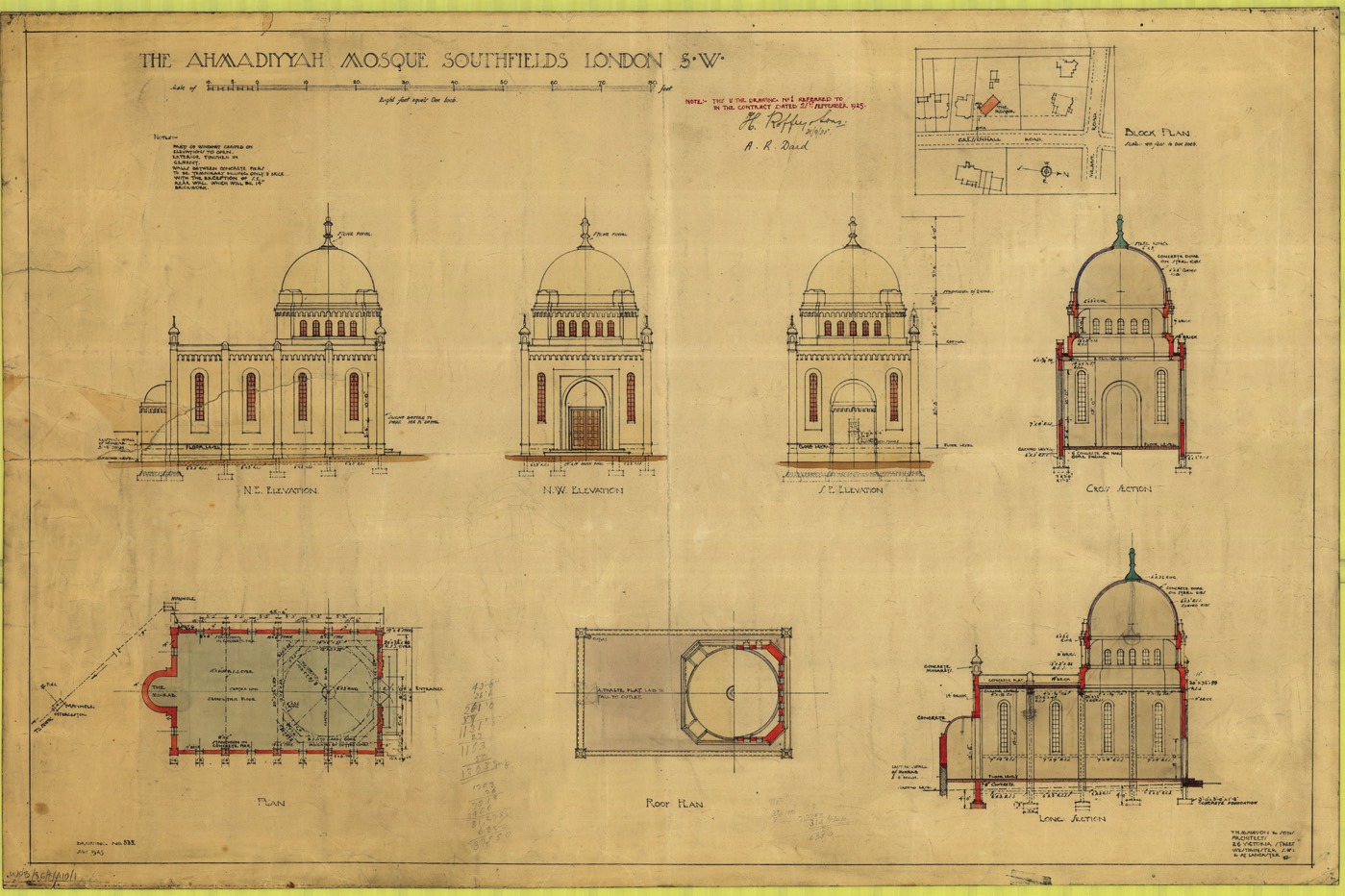
The drawings survive too. They are titled The Ahmadiyyah Mosque, Southfields, London S.W., and they show what was intended: a square prayer hall under a dome, corner turrets, tall arched windows, a garden. The vision was not simply for this to be a place to pray, but for it to be a place to welcome people from all backgrounds to build bridges.

The building took two years to complete. It opened on 3 October 1926, and it was the first purpose-built mosque in London. It has been known ever since as The London Mosque, the name the newspapers and its neighbours gave it, and the one it still carries in the archive. The whole cost of construction came to £6,223, every penny of it sent from Punjab.

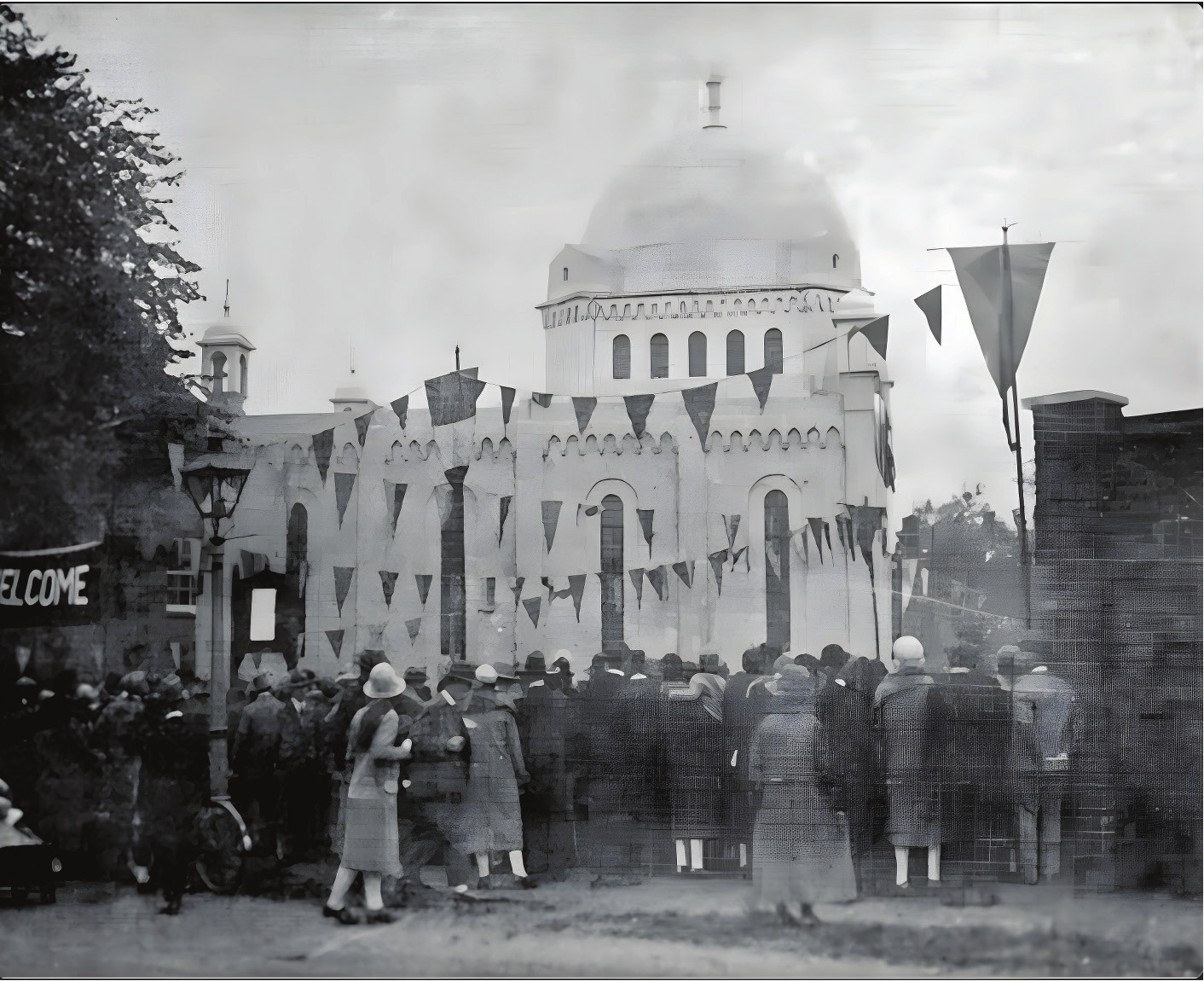
On the day the street was hung with bunting and a “Welcome” board, and hundreds of Londoners came to see what had appeared among the houses of Melrose Road. It was a momentous day not just for Muslims, but also for London and Britain.

Opened 3 October 1926, the first purpose-built mosque in London

East and West have rarely met in a setting so strange and picturesque as seen yesterday, when for the first time in London’s long history, the Mohammadan call to prayer was sung from the glistening minarets of a Mosque at Southfields.

The Daily Chronicle, 4 October 1926
The original drawings: elevations, plans and section
The public at the opening, 3 October 1926

The Khilafat comes to London, 1984

A home for Khilafat (Spiritual Leadership)

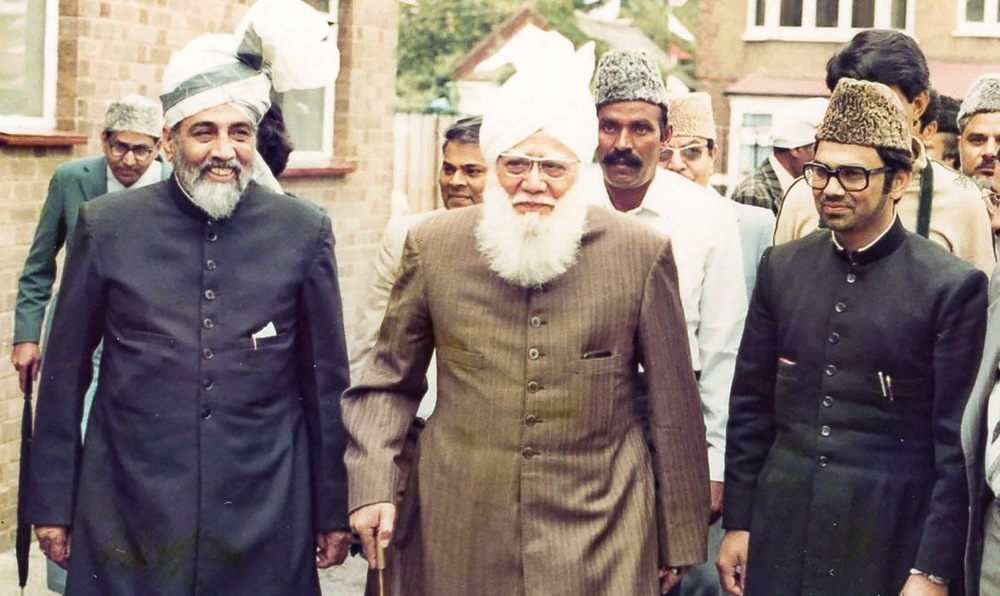
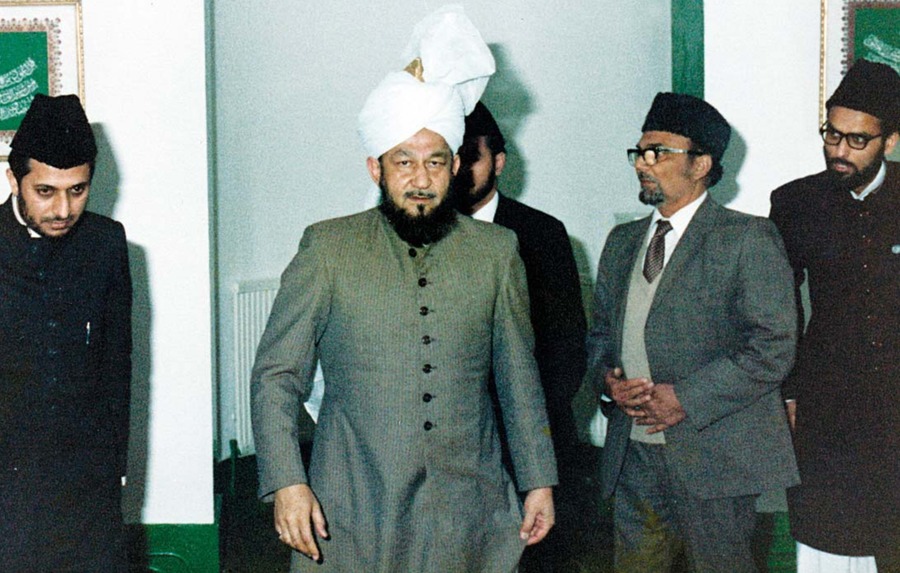
The mosque has been blessed with visits from every Caliph of the Ahmadiyya Muslim Community since 1924. The Third Caliph, Hazrat Mirza Nasir Ahmad (may Allah have mercy on him) visited several times and in 1984, the Fourth Caliph, Hazrat Mirza Tahir Ahmad (may Allah have mercy on him) left Pakistan due to persecution and this small mosque became the international headquarters of a worldwide community. The Fifth Caliph was elected here in 2003. It remained his headquarters until 2019 when he moved to the newly built Mubarak Mosque in Islamabad, Tilford, Surrey.

The Third Caliph on one of his visits to the Fazl Mosque

Humanity First and MTA, launched from the mosque

A voice to the world

It was from this mosque complex that the Fourth Caliph, Hazrat Mirza Tahir Ahmad (may Allah have mercy on him), launched the global humanitarian charity Humanity First, during the Bosnian conflict. The Fourth Caliph also launched the community’s global satellite television channel from the mosque, Muslim Television Ahmadiyya International, which was the world's first global Muslim television station. It has since grown under the leadership of the Fifth Caliph, Hazrat Mirza Masroor Ahmad (may Allah be his Helper), to cover every continent, with an increasing number of broadcast languages and programmes for its global audience. It has served for decades as the platform for the voice of the Caliph, providing guidance on peace and justice for the world at large.

The Fourth Caliph, who was based at the Fazl Mosque from 1984

A Century of Loyalty, Integration and Service

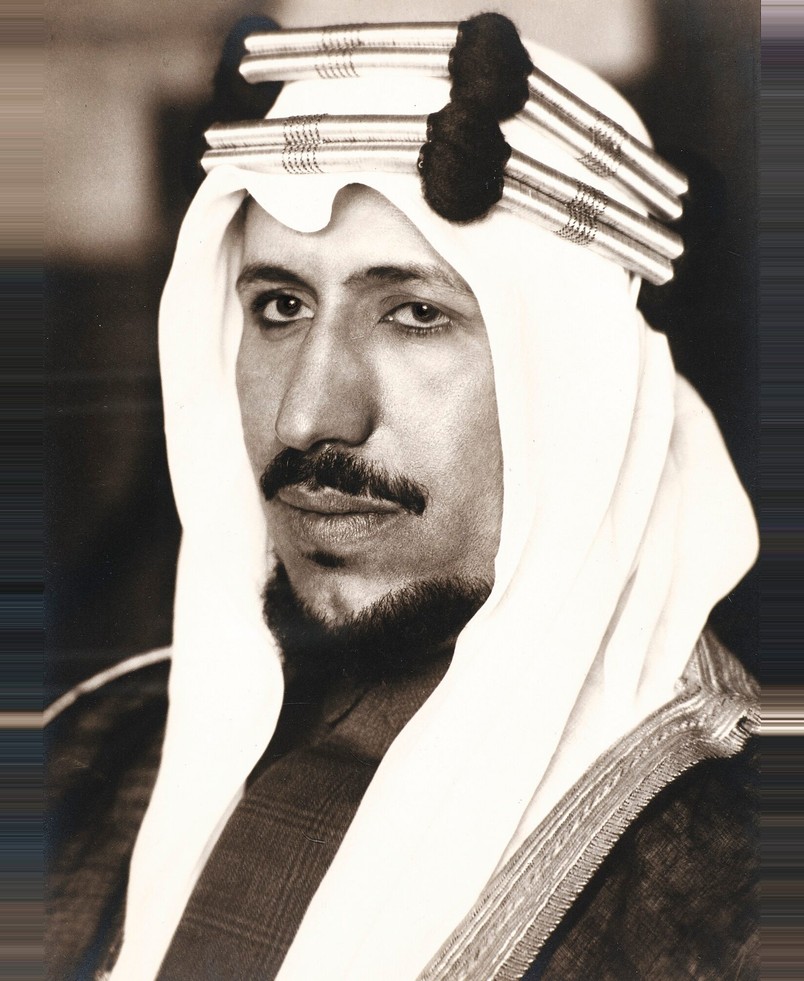
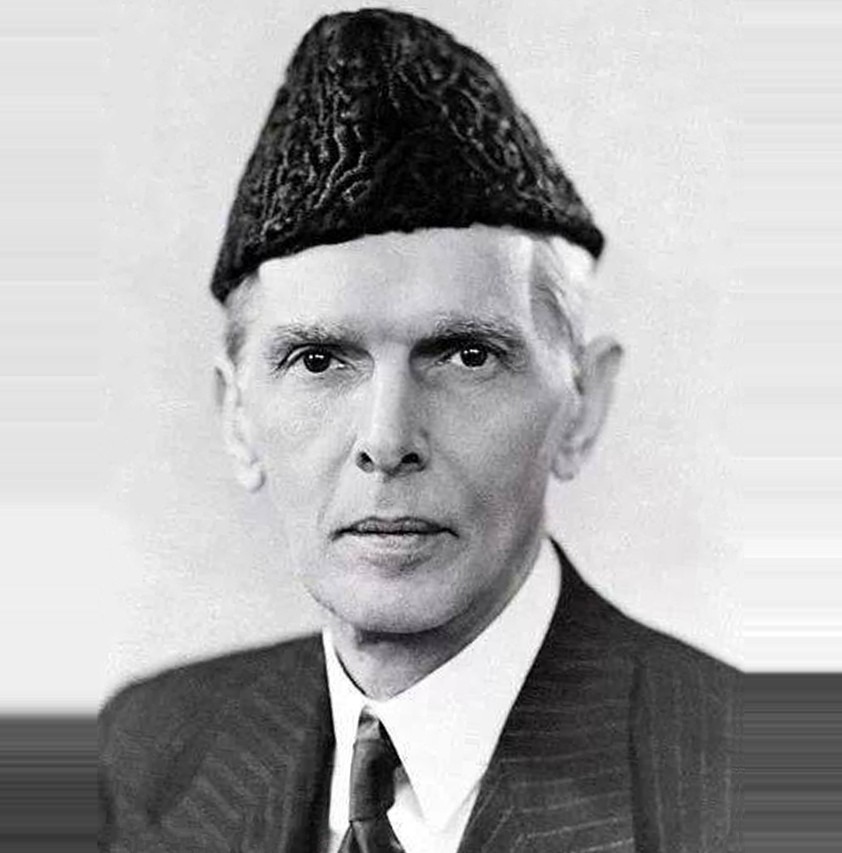
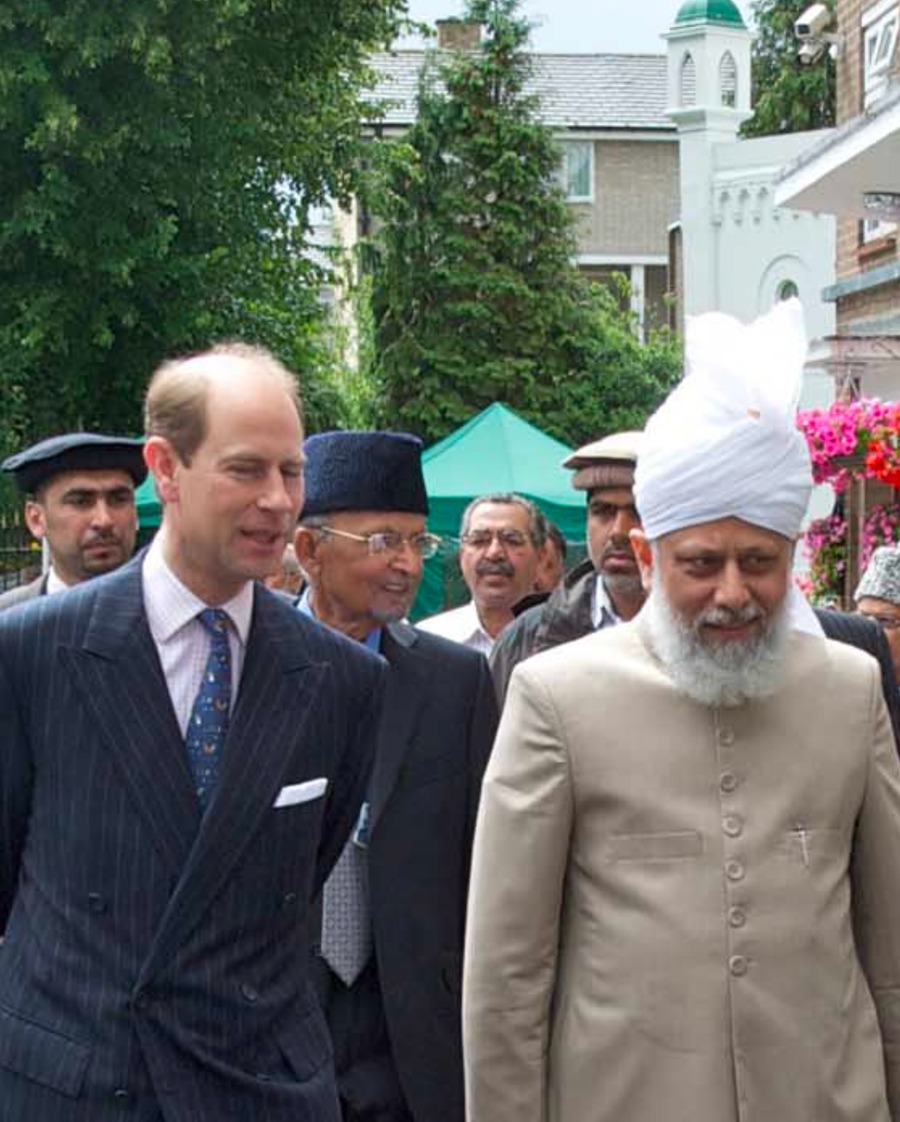
Some Key Visitors

The mosque has received numerous important national and international dignitaries and been a focal point for peace.

HRH Prince Saud

HRH Prince Saud

Later King of Saudi Arabia

Muhammad Ali Jinnah

Muhammad Ali Jinnah

Founder of Pakistan

HRH Prince Edward

HRH Prince Edward

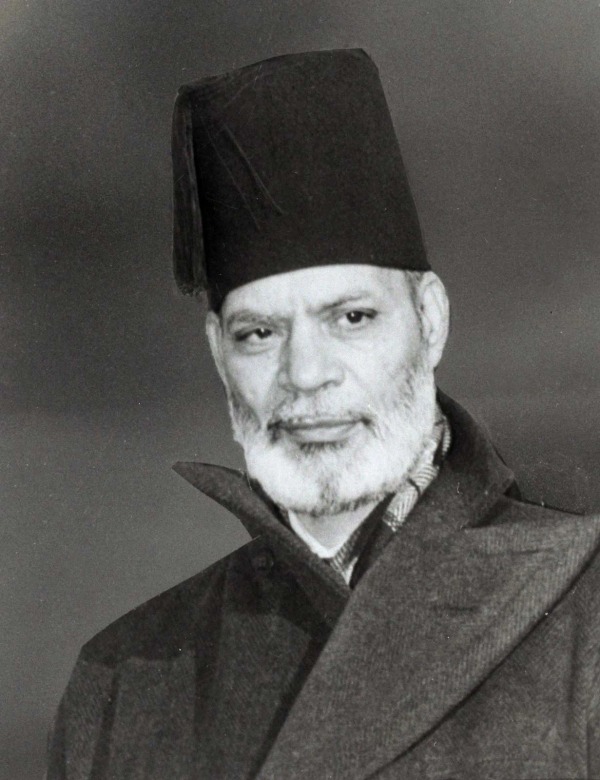
Sir Muhammad Zafrulla Khan

Sir Muhammad Zafrulla Khan

First Foreign Minister of Pakistan and President of the UN

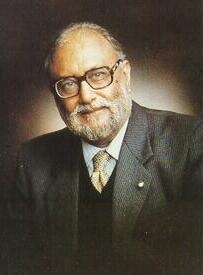
Professor Abdus Salam

Professor Abdus Salam

First Muslim Nobel Laureate in Science

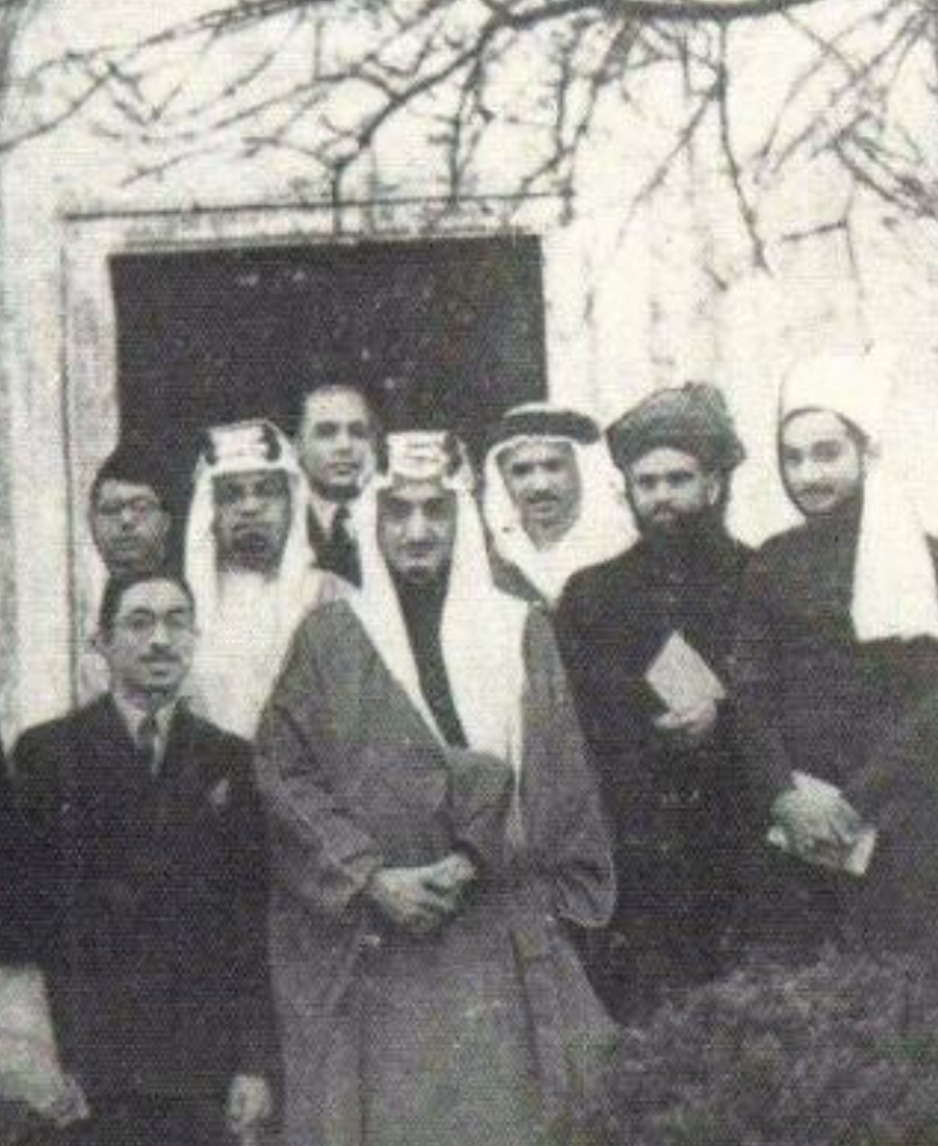
HRH Prince Faisal

HRH Prince Faisal

Viceroy of Mecca, later King of Saudi Arabia

What it has done for its street

Faith in Action

The mosque has played a key role in building bridges, promoting integration and loyalty, and charitable works. Some of the key events held include:

  • Celebrations of the Silver, Diamond and Platinum Jubilees of Her Majesty Queen Elizabeth II, as well as the Coronation of His Majesty King Charles III.
  • Countless local and national charity initiatives, including charity walks, blood drives and feeding the needy. It also served as a vaccination centre during the Covid-19 pandemic.
  • Interfaith harmony: bringing people of all faiths and beliefs together to enhance understanding and build cohesion.
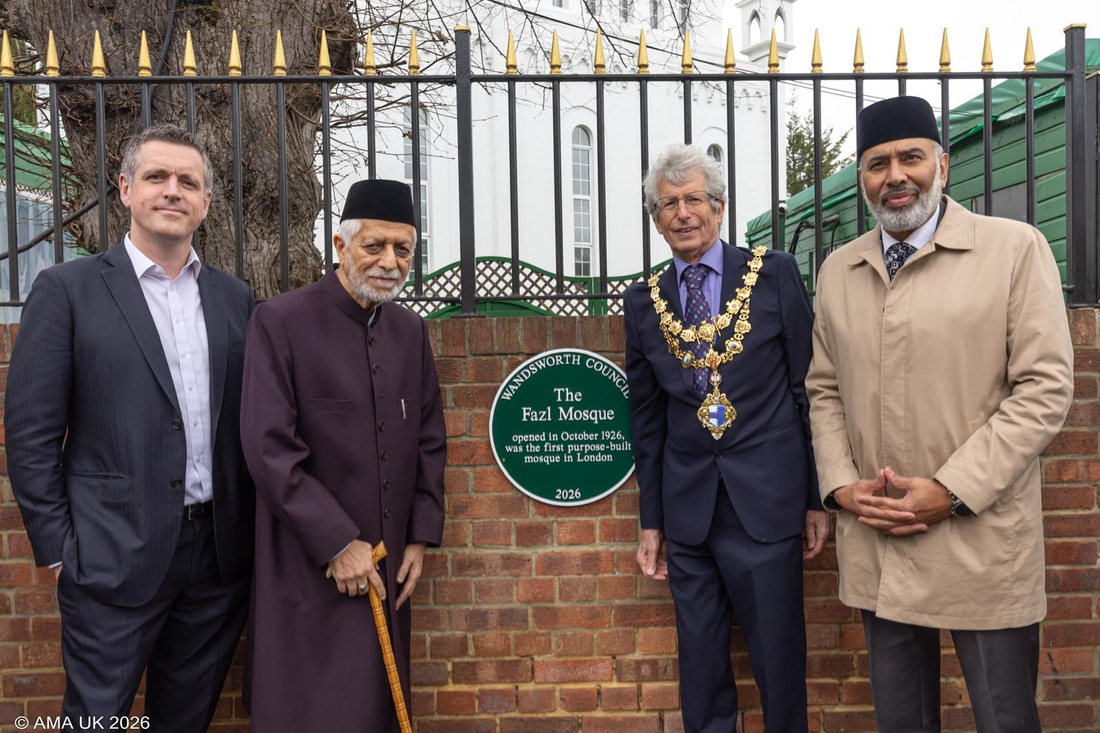
The mosque was granted listed status by English Heritage in 2018, and in 2026 was awarded a Green heritage plaque by Wandsworth Borough Council - further highlighting its heritage as London's first purpose-built mosque.

The centenary will be marked at the mosque itself, in 2026.

Register to Attend